

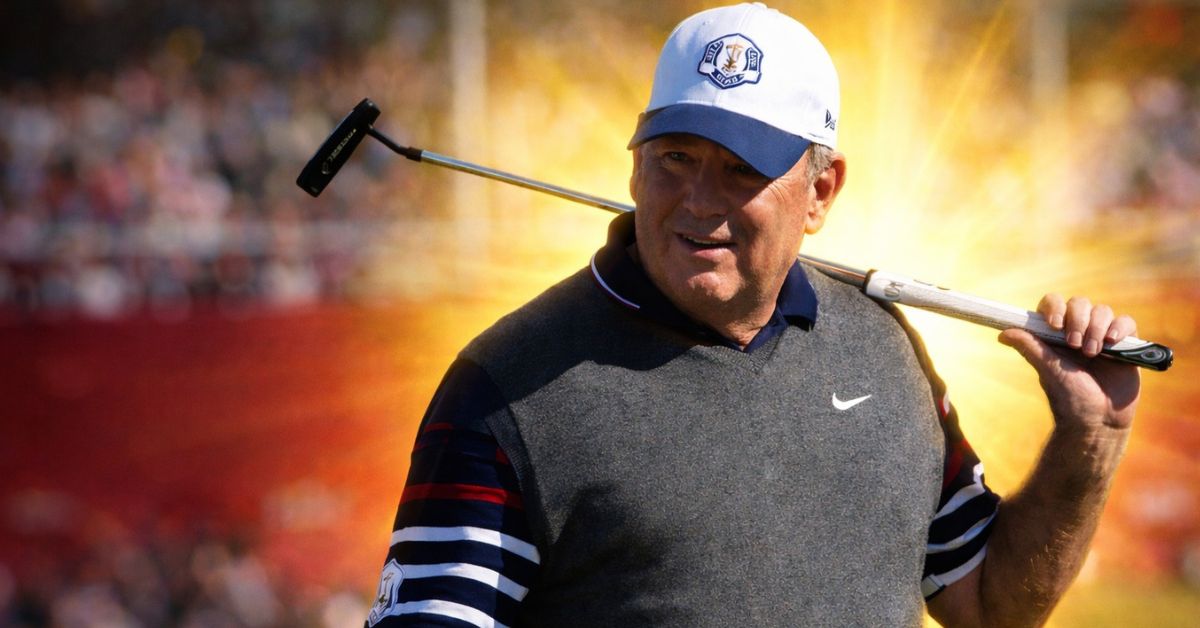
Lanny Wadkins is a well-known name in professional golf, respected for both his strong playing career and his long media presence. From winning major tournaments on the PGA Tour to becoming a trusted golf analyst on television, Wadkins has built a career that spans decades. His success on the course laid the foundation for steady financial growth and long-term recognition in the golf world.
As of 2025, Lanny Wadkins’ net worth reflects more than just prize money. It includes earnings from tournament wins, Golf Channel contracts, endorsements, and media work. This article breaks down his golf career, television role, and income sources to explain how he built and maintained his wealth over time.
Lanny Wadkins Bio
Lanny Wadkins was one of the most competitive and successful golfers of his generation. Born in Richmond, Virginia in 1949, he turned professional in 1971 after a stellar amateur career that included winning the U.S. Amateur Championship in 1970. Wadkins won 21 PGA Tour events during his career, including the 1977 PGA Championship, which he captured in a playoff against Gene Littler. Known for his aggressive style of play and fierce determination, he was a favorite among golf fans throughout the 1970s and 1980s.
Beyond his individual achievements, Wadkins was a stalwart of American golf in team competitions. He played on eight Ryder Cup teams and later served as captain of the victorious 1995 U.S. squad. His tenacious playing style and clutch performances in match play made him one of the most feared competitors in Ryder Cup history. After his playing career, Wadkins transitioned to golf broadcasting, working as a commentator for major television networks and sharing his deep knowledge of the game with a new generation of golf enthusiasts.
Profile Summary
| Category | Details |
| Full Name | Jerry Lanston “Lanny” Wadkins Jr. |
| Familiar Name | Lanny Wadkins |
| Profession | Professional Golfer, Golf Analyst, TV Commentator |
| Spouse | Penelope Wadkins |
| Age | 75 years (as of 2025) |
| Date of Birth | December 5, 1949 |
| Height | 5’9″ (1.75 m) |
| Weight | 175 lbs (79 kg) |
| Children | Jessica Wadkins, Travis Wadkins, Tucker Wadkins |
| Siblings | Bobby Wadkins (younger brother, also a professional golfer) |
| Birthplace | Richmond, Virginia, United States |
| Nationality | American |
| Education | Wake Forest University (Arnold Palmer golf scholarship) |
| Residence | Dallas, TX |
| Turned Professional | 1971 |
What is Lanny Wadkins Net Worth?
Lanny Wadkins‘ net worth is estimated at approximately $8 million as of 2025, though some estimates place it between $10-15 million. This substantial wealth reflects his successful dual career as both a professional golfer and a television broadcaster. His financial success demonstrates how elite golfers can build lasting wealth through tournament winnings, endorsements, and post-playing career opportunities in the media.
During his playing career, Wadkins accumulated significant prize money through his 21 PGA Tour victories, including the 1977 PGA Championship and the 1979 Tournament Players Championship. His consistent performance kept him ranked among the world’s top golfers throughout the 1980s, which translated into lucrative endorsement deals and appearance fees. His Ryder Cup success and reputation as a fierce competitor further enhanced his marketability during his prime years.
After retiring from competitive golf, Wadkins transitioned seamlessly into broadcasting, which became a major source of his wealth. He served as lead golf analyst for CBS Sports for over four years starting in 2002, then spent 13 years as the lead analyst for the Champions Tour on Golf Channel until his retirement in January 2025. His broadcasting work reportedly earned him around $400,000 annually providing steady income long after his playing days ended.
Beyond his salary and tournament earnings, Wadkins’ net worth has been supplemented by various golf-related ventures, including course design consultations, corporate outings, and speaking engagements. His status as a World Golf Hall of Fame inductee and PGA Champion has kept him in demand within the golf community. His financial portfolio demonstrates how professional golfers can leverage their on-course success into long-term financial security through diversified income streams.
Income Details of Lanny Wadkins
Lanny Wadkins’ primary income during his playing career came from PGA Tour tournament winnings. With 21 PGA Tour victories to his name, including the prestigious 1977 PGA Championship, Wadkins accumulated substantial prize money throughout the 1970s and 1980s. His consistent performance, which included multiple runner-up finishes in majors and top-10 world rankings for 86 weeks, ensured he remained among the tour’s top earners.
While exact career earnings aren’t readily available for his era, his success during golf’s growing popularity helped him build a strong financial foundation.Endorsement deals and sponsorships provided another significant revenue stream during Wadkins’ competitive years. As PGA Player of the Year in 1985 and a renowned Ryder Cup competitor, he attracted partnerships with golf equipment manufacturers, apparel brands, and other corporate sponsors. His aggressive playing style and popularity with fans made him an attractive spokesperson for golf-related products.
These endorsement contracts typically supplemented his tournament winnings considerably, as was common for top-tier professional golfers of his generation.Broadcasting became Wadkins’ most stable and lucrative income source after his competitive career. His work as a golf analyst reportedly earned him approximately $400,000 annually. He spent over four years as lead analyst for CBS Sports following Ken Venturi’s retirement in 2002, then transitioned to a 13-year stint as lead analyst for the Champions Tour on Golf Channel.
This broadcasting career provided consistent six-figure income well into his seventies, demonstrating the value networks place on former champions who can provide expert analysis.Beyond tournament play and broadcasting, Wadkins has generated income through various golf-related activities. These include corporate golf outings, speaking engagements, golf clinics, and course design consultations. As a World Golf Hall of Fame member and PGA Championship winner, he commands premium fees for appearances and exhibitions.
What is PGA TOUR Net Worth?
The PGA Tour’s organizational value is substantial but complex due to its nonprofit structure and recent corporate restructuring. While exact figures aren’t publicly disclosed, estimates suggest the PGA Tour organization ranges from $1 billion to $2 billion in net worth. However, the newly created for-profit PGA Tour Enterprises has been valued at approximately $12.75 billion, representing a major shift in how professional golf’s flagship organization operates financially. The valuation reflects extensive revenue streams including television rights, sponsorships, and digital content that have made it a powerhouse in the sports industry.
The PGA Tour operates as a tax-exempt organization under section 501(c)(6), which means its primary purpose cannot be generating profits. In 2023, the PGA Tour reported total revenue of $1.8 billion, down slightly from previous years. The global PGA Tour market was valued at $2.5 billion in 2024 and is projected to expand at a 6% growth rate, reaching $3.8 billion by 2032. The organization’s financial structure prioritizes distributing money to players and charitable causes rather than accumulating profits, which distinguishes it from traditional for-profit sports leagues.
Recent structural changes have transformed the PGA Tour’s financial landscape significantly. In 2024, the organization created PGA Tour Enterprises as a for-profit entity in partnership with Strategic Sports Group, a consortium of professional sports team owners. This restructuring saw the nonprofit PGA Tour deliberately engineer a $451 million loss while the for-profit arm generated an estimated $350-400 million in profit. The arrangement allows institutional investors to benefit while players receive equity grants, though these remain illiquid until a future liquidity event occurs by 2031.
The Tour’s revenue comes from diverse sources that fuel both prize money and operations. Approximately $51 out of every $100 in revenue goes toward player prizes, benefits, retirement earnings, and grants, while $53 goes to organizational expenses. Major income streams include lucrative television broadcasting deals, corporate sponsorships, tournament ticket sales, merchandise licensing, and digital media rights. In 2025, over $550 million was distributed in prize money across PGA Tour events, demonstrating the massive financial scale of professional golf’s premier circuit.
Early Life and Family
Jerry Lanston “Lanny” Wadkins Jr. was born on December 5, 1949, in Richmond, Virginia. He grew up alongside his younger brother Robert “Bobby” Wadkins, who also became a professional golfer, and sister Ann. His parents, Jerry Lanston Wadkins Sr. and Eleanor Frances Burnette Wadkins, provided a supportive environment that encouraged his early interests in golf. Wadkins’ father introduced him to the sport at around age seven, sparking what would become a lifelong passion. The siblings frequently competed informally, creating a competitive atmosphere that helped develop both brothers’ skills from an early age.
The Wadkins brothers dominated junior competition in their home state during their teenage years. Together with his brother Bobby, Lanny kept the Richmond, Virginia junior championship trophy in the Wadkins household for six consecutive years—Lanny won four titles while Bobby captured two. This sibling rivalry pushed both toward excellence and established Lanny as one of Virginia’s top young players. He attended Meadowbrook High School in Chesterfield County where he continued to develop his game while building a reputation as a fierce competitor with exceptional talent.
, a transformative opportunity that connected him directly to one of the sport’s greatest legends. At Wake Forest, he excelled both academically and athletically, balancing his studies with intensive competition. He joined the Kappa Sigma fraternity while at Wake Forest His time there proved enormously successful, as he became one of the nation’s premier amateur players and represented the United States in prestigious international competitions, including the Walker Cup teams of 1969 and 1971.
Wadkins’ amateur career peaked in 1970 when he won the U.S. Amateur Championship by one stroke over Tom Kite played in stroke play format at Waverley Country Club in Portland, Oregon. This victory, combined with his other amateur accomplishments, positioned him perfectly for professional success. The supportive family environment, competitive sibling dynamic, and elite training at Wake Forest all contributed to shaping Wadkins into the tenacious competitor who would go on to win 21 PGA Tour events. His upbringing in Richmond instilled values of hard work and dedication that would define his entire career.
Educational Background
Lanny Wadkins attended Meadowbrook High School in Chesterfield County, Virginia, where he first began to make his mark as an exceptional athlete. During his high school years, he honed his skills on the course while balancing academic responsibilities. His talent was evident early on, as he dominated junior competitions throughout Virginia. The competitive environment at Meadowbrook helped shape his aggressive playing style and fierce determination that would later define his professional career.
After graduating high school, Wadkins attended Wake Forest University on an Arnold Palmer scholarship, one of the most prestigious opportunities available to a young amateur player. This scholarship connected him directly to Palmer’s legacy at the university and provided access to elite coaching and facilities. While at Wake Forest, he joined the Kappa Sigma fraternity, balancing his social life with the demands of competitive athletics. The university’s strong tradition in developing professional players offered him an ideal environment to refine his game.
At Wake Forest, Wadkins excelled as one of the nation’s premier amateur players. He competed at the highest levels of collegiate athletics while pursuing his degree, representing the university in numerous tournaments and earning recognition as an All-American. His time there also included selection to the prestigious Walker Cup teams of 1969 and 1971, where he competed against the best amateur players from Great Britain and Ireland. These international experiences broadened his competitive repertoire and prepared him for the challenges of professional tour life.
Wadkins’ educational journey culminated in his victory at the 1970 U.S. Amateur Championship, where he defeated Tom Kite by one stroke at Waverley Country Club in Portland, Oregon. This achievement while still at Wake Forest demonstrated that his education had successfully prepared him for elite competition. Shortly after completing his amateur career, he turned professional in 1971, applying the lessons learned both in the classroom and on the course. His education at Wake Forest provided not just technical skills but also the mental toughness and strategic thinking that would carry him through a Hall of Fame career.
Lanny Wadkins Career
Lanny Wadkins turned professional in 1971 and immediately made an impact on the PGA Tour. He was named PGA Tour Rookie of the Year in 1972, establishing himself as one of the sport’s rising stars. His aggressive playing style and fearless approach to difficult shots quickly earned him a reputation as one of the tour’s most exciting competitors. Over his career, Wadkins won 21 PGA Tour tournaments, demonstrating remarkable consistency at the highest level of professional competition.
His ability to perform under pressure became his trademark, making him a fan favorite throughout the 1970s and 1980s.Wadkins captured the 1977 PGA Championship, his only major title, defeating Gene Littler in a sudden-death playoff at Pebble Beach. This victory represented the pinnacle of his playing career and cemented his place among the game’s elite. He also won the 1979 Tournament Players Championship, considered the unofficial fifth major.
Despite winning only one major, he finished runner-up in four majors and third in the Masters three times, showing he consistently competed at the highest level. He was named PGA Player of the Year in 1985, recognizing his exceptional performance that season. Wadkins’ Ryder Cup career stands as one of his greatest achievements. He played for the United States in eight Ryder Cups between 1977 and 1993, collecting 21½ points, one of the best records in the competition’s history. His intensity and competitiveness made him perfectly suited for match play, where he thrived on the pressure and head-to-head competition.
He later served as captain of the victorious 1995 U.S. Ryder Cup team. Wadkins ranked in the top 10 of the Official World Golf Rankings for 86 weeks from 1986 to 1988demonstrating his sustained excellence during the peak of his career.After his playing days ended, Wadkins transitioned successfully into broadcasting. He served as lead analyst for CBS Sports for over four years following Ken Venturi’s retirement in 2002.
Age, Height, Weight
Lanny Wadkins was born on December 5, 1949, in Richmond, Virginia, making him 75 years old as of 2025. Despite being in his mid-seventies, Wadkins remained active in broadcasting until his retirement in January 2025, demonstrating remarkable longevity in his career. His age has not diminished his passion for the sport or his ability to provide insightful analysis based on decades of experience. Throughout his life, he has maintained the mental sharpness and engaging personality that made him a fan favorite during both his playing and broadcasting careers.
Wadkins stands 5 feet 9 inches tall (1.75 meters), which was considered average height for professional golfers of his era. While not physically imposing compared to some modern players who stand well over six feet, Wadkins never let his stature limit his competitive spirit or performance. His height was typical for players of the 1970s and 1980s, when the game relied more on precision and course management than the power game that dominates modern professional golf. He proved that heart, determination, and skill could overcome any perceived physical disadvantages.
During his playing career, Wadkins weighed approximately 175 pounds (79 kilograms), maintaining a lean and athletic build suited to the demands of professional tournament play. His weight was well-proportioned to his height, giving him the flexibility and endurance needed to compete at the highest levels over four-round tournaments. Maintaining consistent physical conditioning was essential during an era when players walked every round and faced grueling tournament schedules. His fitness allowed him to sustain a competitive career spanning more than two decades on the PGA Tour.
Wadkins’ physical attributes contributed to his distinctive playing style, which emphasized accuracy and strategic course management over raw power. While he could not overpower courses the way some longer hitters could, he compensated with exceptional ball-striking, a deft short game, and mental toughness that few could match. His compact build allowed for a repeatable, consistent swing that held up under pressure. These physical characteristics, combined with his fierce competitive nature, enabled him to compile 21 PGA Tour victories and earn induction into the World Golf Hall of Fame, proving that success in professional golf comes in many different physical packages.
Lanny Wadkins House
Lanny Wadkins has always kept his personal life very private, and that includes details about his house. Unlike many sports celebrities, he never showed off luxury homes or shared much about his properties in public interviews. His lifestyle reflects calm, comfort, and long-term stability rather than fame-driven attention. This approach fits his personality as a golfer who focuses more on performance than publicity. Over the years, Wadkins is believed to have lived in well-planned, peaceful communities, often linked to golf culture. These areas usually offer access to top golf courses, good weather, and a relaxed environment.
For a former professional golfer, living close to quality courses makes sense, even after retirement. It allows him to stay connected to the game without the pressure of competition. His home life appears centered around family, privacy, and routine. Instead of flashy mansions, his house likely reflects practical luxury—spacious, comfortable, and designed for long-term living. This choice shows how Wadkins values balance, choosing a grounded life after decades in the spotlight of professional sports.
Lanny Wadkins Golf Channel Salary
After retiring from competitive golf, Lanny Wadkins successfully transitioned into sports broadcasting. He became a respected golf analyst, working with major networks like the Golf Channel and CBS Sports. His deep understanding of the game, course strategy, and player mindset made him a trusted voice for golf fans. This experience added a strong second income stream to his career. While his exact Golf Channel salary was never officially revealed, experienced sports analysts like Wadkins are typically paid well. Based on industry standards, his annual earnings were likely in the mid to high six-figure range.
His long PGA Tour career, major championship win, and Ryder Cup experience increased his value as a broadcaster.Beyond salary, his media role also brought long-term professional relevance. Broadcasting kept him connected to golf, expanded his influence, and strengthened his personal brand. Even after stepping away from regular TV appearances, the income and recognition from those years played a major role in building his overall financial success.
Lanny Wadkins Net Worth
Lanny Wadkins’ net worth is built on decades of achievement in professional golf and media. During his PGA Tour career, he won 21 tournaments, including the 1977 PGA Championship. These victories earned him substantial prize money, especially impressive for his era. Consistency on tour helped him secure steady earnings over many seasons. In addition to tournament winnings, Wadkins earned income through endorsements, sponsorships, and appearance fees. Later, his broadcasting career added another strong financial layer.
Working with top sports networks allowed him to earn well even after his playing days ended. This combination of competitive and media income helped him grow and protect his wealth.Today, Lanny Wadkins’ estimated net worth is believed to be several million dollars. His financial position reflects smart career choices, long-term relevance, and disciplined living. Rather than quick fame, his wealth came from steady success, experience, and staying respected in the golf world for decades.
Where Is Lanny Wadkins
Lanny Wadkins is currently living a quiet retirement life, away from daily media attention. He is no longer active as a full-time golf broadcaster but remains connected to the sport. From time to time, he appears at golf events, charity tournaments, or special golf-related programs. These appearances keep his legacy alive without demanding a full schedule. He is believed to be living in the United States, possibly in a warm, golf-friendly state.
Many retired golfers choose locations that offer good weather, peaceful communities, and access to courses. This lifestyle allows Wadkins to enjoy golf casually while focusing on personal time and family. Today, Wadkins values privacy more than public presence. He spends his time enjoying the rewards of a long and successful career. Although he stays out of the spotlight, his influence on golf remains strong, and he is still remembered as one of the most consistent and respected players of his generation.
Lanny Wadkins Golfer | Golf | Majors
Lanny Wadkins is a former American professional golfer known for his smooth swing and calm presence on the course. Born on December 11, 1949, in Richmond, Virginia, he became one of the most consistent players on the PGA Tour during the late 1970s and 1980s. His confident playing style helped him earn respect among fans and fellow golfers alike.Wadkins won 21 PGA Tour events in his career, including the prestigious 1977 PGA Championship. This major victory was a defining moment that placed him among the elite golfers of his era.
He was especially strong under pressure, often performing his best in high-stakes tournaments and tight final rounds.Beyond tournament wins, Lanny Wadkins is also remembered for his contributions to team golf and broadcasting. He represented the United States multiple times in the Ryder Cup, later serving as a team captain. After stepping away from full-time competition, he became a well-known golf analyst, sharing expert insights with a wide television audience.
Frequently Asked Questions
What is Lanny Wadkins’ net worth in 2025?
Lanny Wadkins’ estimated net worth in 2025 is around $700,000 – $1 million from golf earnings and related activities.
Who is Lanny Wadkins in golf?
Lanny Wadkins is a famous American golfer with 21 PGA Tour wins and a major championship victory.
Did Lanny Wadkins win any major golf titles?
Yes, he won the 1977 PGA Championship, one of golf’s four major tournaments.
What did Lanny Wadkins do after retiring from playing?
After retirement, he became a golf broadcaster, analyst and course designer.
Is Lanny Wadkins in the Golf Hall of Fame?
Yes, Wadkins was inducted into the World Golf Hall of Fame in 2009.
Conclusion
Lanny Wadkins is one of the most respected figures in golf. He turned professional in 1971 and won 21 PGA Tour events during his career. His biggest achievement came with the 1977 PGA Championship win at Pebble Beach. Wadkins was ranked in the top 10 worldwide for many weeks during his prime.After competing, he became a successful TV golf analyst and broadcaster .He also worked on golf course design and consulting later in life .Wadkins was inducted into the World Golf Hall of Fame, cementing his legacy. His estimated net worth in 2025 reflects decades of success in sport and media. Though not among the richest athletes, his career has been financially and professionally rewarding.

Laiba SEO is a digital marketing specialist focused on search engine optimization, celebrity news trends, and content strategy. She helps brands grow online visibility through data-driven SEO and engaging content.