

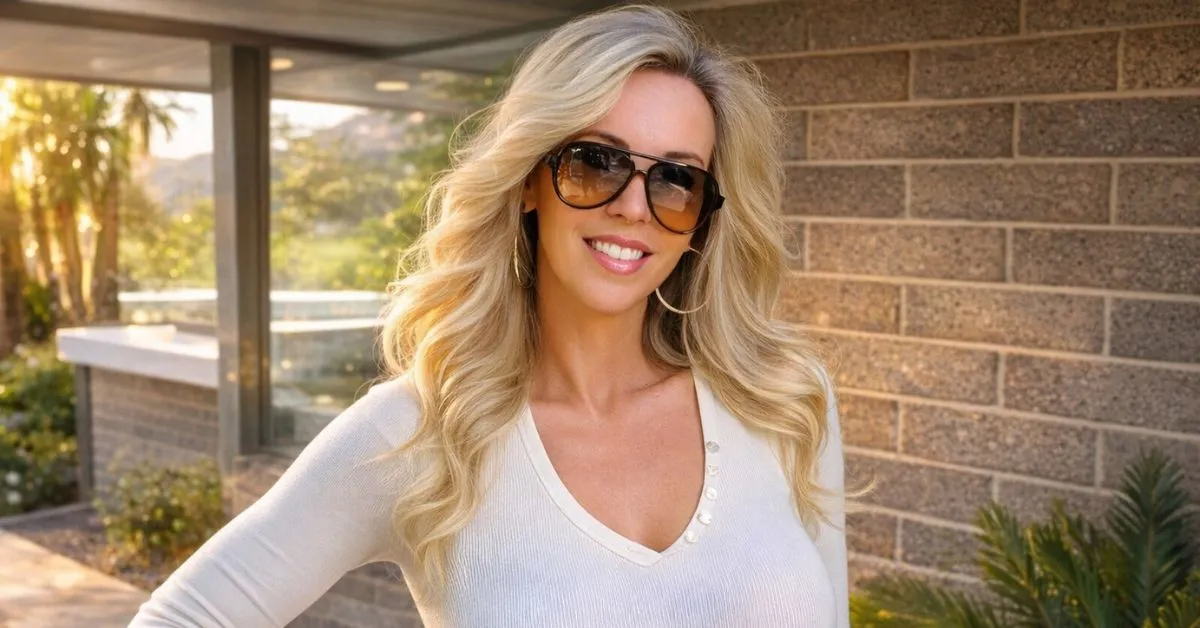
The story of Sandra Otterson is not what most people expect. Many know her as “Wifey,” but very few understand how she built a powerful online brand from scratch. She didn’t follow a normal career path. Instead, she turned a simple idea into a digital empire that still earns money years later. In this article, you will discover the untold story behind her rise, her smart business moves, and how she created multiple income streams.
From her early life to her success journey, everything is explained in a simple way. If you are curious about her net worth, personal life, and hidden secrets, this guide will answer them all. When people search for Sandra Otterson’s biography, they usually want more than basic facts. They want the real story—the struggles, the risks, and the decisions that changed her life. Known widely as “Wifey,” Sandra became famous by building a unique brand that stood out in a crowded online world.
Quick Facts About Sandra Otterson
| Category | Details |
| Full Name | Sandra Otterson |
| Stage Name | Wifey |
| Date of Birth | May 15, 1965 |
| Age (2026) | 60 years |
| Birthplace | Oregon City, Oregon, USA |
| Nationality | American |
| Profession | Content Creator, Entrepreneur |
| Husband | Kevin Otterson |
| Years Active | 1997 – Present |
| Net Worth | $5 – $10 Million (estimated) |
| Height | 5’6″ (167 cm) |
| Famous For | Founder of Wifey’s World |
| Residence | Scottsdale, Arizona, USA |
| Main Income Sources | Subscription content, online business, brand deals |
Who is Sandra Otterson?
Sandra Otterson is an American entrepreneur and independent adult content creator, best known by her online alias “Wifey.” She was born on May 15, 1965, in Oregon City, Oregon, and grew up in a small working-class community south of Portland. She met her husband Kevin Otterson during their high school years, and the two have remained together for over 35 years.
Sandra first gained widespread attention in 1997 when Kevin began posting her photographs on the alt.binaries.pictures.erotica newsgroup. Because her eyes were blacked out in the photos, she was nicknamed “Wifey.” The images became an instant hit, and the couple followed up by launching their official website, Wifey’s World, in 1998.
What set Sandra apart from others in her field is that she never signed with a traditional production studio or agency, instead retaining full creative and financial ownership of her content for nearly three decades. Kevin served not just as her husband but as co-founder, producer, web developer, and business manager behind the brand.
Early Life and Background
Sandra Otterson was born on May 15, 1965, in Oregon City, Oregon — a historic community located approximately 12 miles south of Portland along the Willamette River. Oregon City holds significance as the first incorporated city west of the Rocky Mountains and served as the original capital of the Oregon Territory. Sandra grew up during the 1970s in a typical American working-class family, in a small-town environment where community ties were strong and privacy was deeply valued.
The Pacific Northwest setting shaped her formative years with its natural landscapes and quiet suburban normalcy. Sandra has deliberately kept the identities of her parents and siblings private throughout her career — a decision she has maintained consistently for nearly three decades, demonstrating a strong sense of personal boundaries that would later serve her well professionally.
Meeting Kevin: A High School Love Story
Sandra first crossed paths with Kevin Otterson during their high school years in Oregon City, Oregon. Growing up in a small, close-knit community, the two naturally gravitated toward each other, forming a bond that would prove to be the most defining relationship of Sandra’s life. Few could have predicted at the time just how far their partnership would eventually take them.
Their relationship blossomed steadily through their teenage years, built on a foundation of trust, shared values, and genuine companionship. Unlike many high school romances that fade after graduation, Sandra and Kevin’s connection only grew stronger with time. By the mid-1980s, the couple had turned their commitment into marriage, beginning a life together that would span decades.
What makes their love story particularly remarkable is how it transcended the personal and became deeply professional as well. Kevin would go on to serve not only as Sandra’s husband and life partner, but also as her co-creator, producer, and business manager.
Education and Early Career
Sandra Otterson completed her schooling in Oregon City, receiving a standard education typical of small-town Pacific Northwest communities during the 1970s and early 1980s. She was part of a working-class upbringing that emphasized practicality, hard work, and self-reliance — values that would later define her approach to building her own business entirely from the ground up.
Before entering the world of content creation, Sandra lived a conventional, private life alongside Kevin. Like many couples of their generation, they pursued ordinary employment and built a modest life together.
Details of her specific early jobs or professional roles have been kept largely private, as Sandra has always been careful about separating her personal history from her public persona. Her transition into entrepreneurship was not born out of desperation but rather from a calculated recognition of an emerging opportunity.
The Birth of “Wifey”: How It All Started
The story of “Wifey” began not with a grand business plan, but with a simple, unconventional idea that Kevin Otterson had in the mid-1990s. As the internet was beginning to open up new possibilities for ordinary people, Kevin recognized an untapped opportunity in the earliest days of commercial internet adoption. Together, he and Sandra made the bold decision to share a side of their personal life that most couples would keep entirely private.
The name “Wifey” was not something Sandra chose for herself — it emerged organically from the online community that first discovered her. Because her eyes were blacked out in the early photos Kevin posted, audiences knew her only as a mysterious, relatable, everyday woman rather than a polished performer. That anonymity became one of the most powerful elements of her brand.
What truly set the “Wifey” concept apart was its authenticity. Sandra was not a Hollywood actress or a studio-produced performer — she was simply a married woman from Oregon, and audiences could feel the difference. That realness struck a chord with people in a way that traditional adult entertainment never quite managed to replicate.
1997: The UseNet Experiment
In 1997, Kevin Otterson took the first step by posting Sandra’s photographs on UseNet, a decentralized online discussion and file-sharing network that predated modern social media and content platforms. Specifically, the photos were shared on the alt.binaries.pictures.erotica newsgroup, one of the most active corners of UseNet at the time. It was a quiet, low-key experiment — but the response was anything but quiet.
The photos spread rapidly through the UseNet community, gathering attention and enthusiasm far beyond what Kevin or Sandra had anticipated. Audiences were drawn in by the amateur, genuine quality of the content, which stood in sharp contrast to the heavily produced material dominating the adult entertainment industry at the time. Sandra quickly became one of the most talked-about figures in that online space.
The UseNet experiment proved to be a crucial proof of concept. It demonstrated that there was a genuine and sizable audience hungry for authentic, independent content created outside the traditional studio system. That early validation gave Sandra and Kevin the confidence and momentum they needed to take their idea to the next level.
Why People Connected with “Wifey”
At the heart of “Wifey’s” appeal was something refreshingly simple — she felt real. In an era when adult entertainment was dominated by overly produced, artificial imagery, Sandra represented something audiences had rarely seen before: an ordinary woman in a genuine relationship, sharing her life without the gloss of professional staging. That relatability was magnetic.
The mystery surrounding her identity also played a significant role in her early popularity. Because her face was partially obscured in early content, viewers projected their own sense of familiarity onto her. She could have been anyone’s neighbor, colleague, or classmate — and that sense of closeness made her far more compelling than conventional performers with polished public personas.
There was also an emotional authenticity to the Wifey brand that went beyond appearances. Sandra and Kevin’s real-life marriage was visible in everything they produced, and audiences responded deeply to the warmth and genuine connection between them. In a space often criticized for its impersonal nature, “Wifey” offered something that felt genuinely human.
1998: Launching Wifey’s World
Building on the remarkable success of their UseNet experiment, Sandra and Kevin took the natural next step in 1998 by launching their own dedicated website — Wifey’s World. It was one of the earliest subscription-based independent adult websites on the internet, arriving at a time when very few creators had thought to build and own their own digital platform. The move was ahead of its time in almost every sense.
From the beginning, Wifey’s World was designed to give audiences an immersive and interactive experience. The site featured a live Wifey Cam, order forms for adult tapes, photo galleries, and video clips — all managed and operated entirely by Sandra and Kevin without any outside studio involvement. Every element of the website reflected their commitment to maintaining full creative and financial control.
The launch of Wifey’s World marked a turning point not just for Sandra personally, but for the broader concept of independent content creation. Long before platforms like OnlyFans made creator-owned adult content mainstream, Sandra and Kevin had already built a thriving, self-sustaining business from scratch. The website’s early success proved that audiences were willing to pay directly to support creators they felt a genuine connection with.
Career Evolution and Success
What began as a quiet experiment on Usenet in 1997 gradually evolved into one of the most enduring independent careers in the history of online content creation. Sandra and Kevin continuously refined and expanded their offerings throughout the late 1990s and early 2000s, growing Wifey’s World from a simple photo-sharing venture into a fully developed subscription-based platform with a loyal and dedicated global fanbase.
As the internet matured and content consumption habits shifted, Sandra demonstrated a rare ability to grow alongside the technology rather than be left behind by it. She embraced video content early, expanded her library steadily, and kept her audience engaged by consistently delivering the authentic, personal style that had made her famous in the first place. Her career did not peak and fade — it compounded over time.
By any measure, the financial results reflected the strength of her approach. With an estimated net worth of between five and ten million dollars built entirely without studio backing, Sandra became living proof that an independent creator with the right vision, the right partner, and the right work ethic could build a genuinely lucrative and lasting career on their own terms.
More Than Just Videos
Sandra’s success was never purely about the content itself — it was about the world she built around it. Wifey’s World offered fans a multi-dimensional experience that included live cam sessions, downloadable photo sets, physical merchandise, and direct order forms for tapes and video clips.
Each element was designed to deepen the connection between Sandra and her audience rather than simply sell a product. The interactive nature of the platform was particularly ahead of its time. The Wifey Cam gave fans a sense of real-time access that very few creators were offering in the late 1990s, creating a feeling of genuine participation rather than passive consumption.
That sense of closeness and accessibility became one of the defining features of the Wifey brand throughout its history. Sandra also understood the importance of consistency and reliability in building a lasting audience. .
Adapting to Industry Changes
The internet content landscape changed dramatically between 1998 and the present day, and the adult entertainment industry changed with it — often in brutal and unforgiving ways. Many creators who thrived in the early days of the web were wiped out by the rise of free streaming platforms, shifting audience expectations, and the collapse of traditional subscription models. Sandra navigated all of these disruptions with remarkable resilience.
Rather than fighting the changing landscape, Sandra and Kevin made quiet, strategic adjustments that kept their brand relevant without abandoning what made it special. They evolved their technical infrastructure, updated the look and feel of their platform, and found ways to reach new audiences while holding onto the loyal base they had carefully built over the years.
Their independence proved to be a major advantage — without corporate oversight, they could pivot quickly when needed. Their longevity in such a fast-moving and competitive space is perhaps their greatest professional achievement.
The Philosophy Behind the Content
At the core of everything Sandra created was a deeply held belief in authenticity over performance. She never tried to be something she was not, never chased the aesthetic of mainstream studio production, and never pretended to be younger, more glamorous, or more theatrical than she genuinely was.
Her content was an honest reflection of who she and Kevin actually were as a couple, and audiences responded to that honesty in profound and lasting ways. Sandra also operated from a philosophy of complete ownership and independence.
She and Kevin made a conscious decision from the very beginning to retain full control over everything they produced — the content, the distribution, the pricing, and the branding. That philosophy was not simply a business strategy; it was a reflection of their values around privacy, self-determination, and personal dignity
Sandra Otterson Net Worth and Financial Success
Sandra Otterson’s financial journey is one of the most impressive in the history of independent online content creation. Built entirely without the backing of a major studio or external investors, her estimated net worth sits between five and ten million dollars — a figure that reflects nearly three decades of disciplined, owner-operated business building. What makes that number particularly remarkable is that every dollar was generated and retained by Sandra and Kevin themselves.
Her financial success did not happen overnight. It was the result of consistent effort, smart reinvestment, and the kind of long-term thinking that most creators in her space never applied. While many of her contemporaries spent freely during the peak years of early internet content, Sandra and Kevin quietly built a sustainable financial foundation that continued generating income long after the initial wave of excitement had passed.
The broader significance of her net worth goes beyond the number itself. Sandra demonstrated that an independent creator — working without agents, without studios, and without outside funding — could achieve genuine financial security by simply owning everything they produced and refusing to give that ownership away. In doing so, she became an unlikely blueprint for the creator economy model that would not become mainstream for another two decades.
Revenue Sources
Sandra’s income was never dependent on a single stream, which is a key reason her financial success proved so durable over time. From the very beginning, Wifey’s World generated revenue through multiple channels simultaneously — including monthly subscriptions, pay-per-download video clips, physical tape orders, photo set purchases, and live cam session fees. That diversity of income insulated the business against the kind of single-point failures that brought down many of her contemporaries.
As technology evolved, so did her revenue model. Sandra and Kevin adapted their monetization strategy to reflect changing consumer habits, moving from physical media sales toward digital downloads, and eventually embracing modern subscription platforms that aligned naturally with the direct-to-fan model they had always championed. Each transition was handled with the care of people who understood that their income depended on getting it right.
Merchandising and branded content also contributed to the overall revenue picture across various periods of her career. Rather than licensing her brand to outside parties, Sandra retained control over all commercial extensions of the Wifey identity, ensuring that every revenue stream fed back directly into the business she and Kevin had built together rather than into the pockets of intermediaries.
Smart Financial Decisions
Perhaps the single smartest financial decision Sandra ever made was the one she made before her career even properly began — the decision to own everything outright and never sign with a studio. That choice, made in the earliest days of Wifey’s World, meant that every dollar the platform generated belonged entirely to Sandra and Kevin. There were no royalty splits, no agency commissions, and no corporate stakeholders taking a cut of their earnings.
Sandra and Kevin also demonstrated financial discipline by keeping their operational costs lean throughout the life of the business. By handling production, web development, editing, and management entirely in-house, they avoided the bloated overhead that plagued larger production companies. That lean approach meant that a much higher percentage of every dollar earned translated directly into profit and long-term savings.
Their decision to invest in real estate further reflects the kind of financial thinking that set them apart from many of their peers. Rather than allowing their earnings to sit idle, Sandra and Kevin channeled their income into tangible assets that would hold and grow in value over time.
Personal Life and Relationships
At the center of Sandra Otterson’s personal life is her decades-long marriage to Kevin Otterson — a relationship that began in the hallways of their high school in Oregon City and has endured for well over thirty-five years. Theirs is a partnership that defies the statistical odds of high school romances, having grown from teenage affection into a fully shared life and career built on mutual trust and deep companionship.
What makes their relationship particularly unusual is how seamlessly it merged the personal and the professional. Kevin has never been simply a husband in the background — he has been Sandra’s creative partner, technical backbone, and business manager for the entirety of their career together. The lines between their marriage and their work have always been blurred in the best possible way, with each dimension of their relationship reinforcing the other.
Sandra has spoken very little publicly about the finer details of her personal life, preferring to let her work speak for itself while keeping the more intimate dimensions of her marriage private. That restraint is entirely consistent with the careful, boundaried approach she has always taken to managing the tension between her very public career and her deeply private sense of self.
Family and Children
Sandra and Kevin have maintained an exceptionally private stance when it comes to the subject of family and children. Very little verified information is publicly available about whether the couple has children, and Sandra has been consistent and deliberate in keeping that aspect of her life completely shielded from public view. In a career defined by a certain kind of openness, the protection of her family life stands as one of her most firmly held personal boundaries.
This deliberate separation between her professional persona and her family identity reflects a sophisticated understanding of the risks that come with internet fame. Sandra was building her career during the early days of the web, long before conversations about digital privacy had entered the mainstream. Her instinct to protect the people closest to her from public scrutiny was both ahead of its time and deeply telling of her values as a person.
Whatever the details of her family life may be, it is clear that Sandra has always prioritized the wellbeing and privacy of those she loves above any potential gain that might come from sharing that part of herself publicly. It is a choice that has earned her a measure of respect even among those unfamiliar with the specifics of her career.
Privacy in a Public Career
Few people have managed the paradox of public exposure and personal privacy quite as skillfully as Sandra Otterson. She built an entire career on a form of intimate visibility while simultaneously maintaining strict control over what the world was and was not allowed to know about her. The blacked-out eyes in her earliest photos were not just a visual choice — they were a statement of intent that she would share on her own terms.
That philosophy of controlled disclosure ran through every aspect of her professional life. She never gave lengthy press interviews, never sought celebrity in the conventional sense, and never allowed the appetite of her audience to dictate how much of herself she was willing to reveal. The result was a kind of carefully managed mystique that actually deepened her audience’s fascination rather than diminishing it.
Sandra’s approach to privacy also extended to her use of legal tools when necessary. When her boundaries were crossed — whether through unauthorized distribution of her content or unwanted intrusions into her personal life — she and Kevin responded with the seriousness of people who understood that privacy was not just a preference but a right worth defending.
Physical Appearance and Characteristics
Sandra Otterson’s appearance has always been one of the most immediately recognizable aspects of her brand. She is a naturally curvy woman with an approachable, girl-next-door quality that resonated deeply with audiences who had grown tired of the overly sculpted aesthetic that dominated mainstream entertainment. Her look was never manufactured or artificially enhanced to fit an industry standard — it was simply and authentically her own.
Her warm, expressive features and genuine smile contributed significantly to the emotional connection audiences felt with her. In a space where performers often maintained a deliberate emotional distance from their viewers, Sandra projected a natural friendliness and ease that made people feel as though they were watching someone they actually knew. That quality of warmth was impossible to fake and central to everything that made her compelling.
Sandra’s physical presence was also notable for its consistency with the everyday reality of the women in her audience’s lives. She did not inhabit a fantasy that felt unattainable — she represented a version of attractiveness that felt real, achievable, and deeply human.
The “Wifey” Look
The “Wifey” aesthetic was built around a very specific visual identity — natural, unpretentious, and unmistakably real. From the beginning, Sandra leaned into a warm, domestic presentation that contrasted sharply with the slick, studio-polished look that defined most of her industry at the time. She looked like someone you might encounter in a grocery store or at a neighborhood barbecue, and that ordinariness was precisely the point.
Her styling choices reinforced that identity consistently across her career. Rather than adopting the dramatic makeup, elaborate costumes, or theatrical staging common in professional production, Sandra favored a natural, approachable look that required no suspension of disbelief from her audience.
What they saw was genuinely what they got — a real woman in a real home living a real life, and that simplicity was extraordinarily powerful. Over time, the “Wifey” look became a recognizable brand in its own right — one that communicated a specific set of values simply through visual presentation.
Physical Transformation Over the Years
Like any person who has maintained a public-facing career across nearly three decades, Sandra Otterson has changed naturally and visibly over the course of her time in the spotlight. Rather than attempting to conceal or reverse the effects of aging, she embraced them with the same straightforwardness that characterized her entire approach to content creation. Her willingness to age openly in front of her audience was, in its own way, another expression of the authenticity that built her career.
That natural evolution actually deepened her connection with a significant portion of her fanbase. As Sandra moved through her thirties, forties, and into her fifties, she attracted audiences who specifically sought out content featuring mature women — a demographic that mainstream entertainment had consistently underserved. Her physical transformation was not a liability; for many of her fans, it was precisely the point.
Sandra never sought surgical intervention to maintain a younger appearance, and that decision aligned perfectly with the values her brand had always represented. Her audience had followed her because she was real, and growing older authentically was simply the continuation of that realness.
Style and Presentation
Sandra’s presentation style was always rooted in approachability rather than glamour. She favored natural settings, comfortable clothing, and a relaxed demeanor that communicated ease and confidence without the artificiality of professional styling. That casual, lived-in presentation was a deliberate contrast to the theatrical excess of mainstream entertainment, and it worked because it felt genuinely representative of who she was.
Her approach to presentation also reflected a deep understanding of her audience’s desires. The people drawn to the Wifey brand were not looking for unattainable fantasy — they were looking for something that felt close, familiar, and real. Sandra’s style delivered exactly that, not through careful calculation but simply by being herself in front of the camera with a minimum of artifice or pretension.
As her career progressed, Sandra’s style evolved naturally while maintaining its essential character. She remained recognizably herself across all the changes that two decades of life and work brought, and that consistency was part of what kept her audience loyal. In a media landscape that constantly demanded reinvention, Sandra’s quiet commitment to her own authentic style was quietly radical.
The Real Estate Controversy
At various points in her career, Sandra Otterson’s financial activities — including real estate investments and property transactions — attracted a degree of public scrutiny that she had not sought and did not welcome. The intersection of significant personal wealth with a high-profile and unconventional career created a target that some individuals and parties were willing to exploit through legal and reputational means.
Details of the specific controversies surrounding her real estate activities have been largely kept out of the public record, consistent with Sandra’s broader approach to keeping her personal financial affairs private. What is known is that the couple navigated several disputes related to property and business dealings with the same determination they brought to every other challenge they faced as independent operators.
The real estate dimension of Sandra’s story is a reminder that financial success brings complications as well as rewards. Building substantial wealth outside of traditional institutional structures meant that Sandra and Kevin had to defend that wealth through their own resources and judgment, without the legal and financial infrastructure that larger organizations take for granted.
When Personal Life Meets Professional Career
One of the most challenging aspects of Sandra Otterson’s career has been managing the moments when her personal life became entangled with the public-facing professional identity she had so carefully constructed. Because her marriage to Kevin was central to the Wifey brand, any turbulence in that relationship had the potential to reverberate publicly in ways that purely private couples never have to contend with.
Sandra handled these intersections with considerable grace and discretion. She never used her platform to air personal grievances, never allowed professional disputes to bleed into her public persona in damaging ways, and consistently maintained the boundary between what her audience was entitled to know and what remained none of their business. That discipline was not always easy, but it was always deliberate.
The experience of living a semi-public life for nearly three decades gave Sandra a hard-won wisdom about the costs and rewards of visibility. She understood better than most that the audience’s sense of intimacy with her was a carefully managed illusion — close enough to feel real, but bounded enough to protect the actual human beings behind the brand.
The Legal Battle
Like many pioneering figures in the early internet content space, Sandra Otterson was not immune to legal challenges over the course of her career. The unauthorized distribution and piracy of her content was a persistent problem throughout the 2000s, as peer-to-peer file sharing and early streaming sites made it increasingly difficult for independent creators to control where their material ended up and who was profiting from it.
Sandra and Kevin pursued legal action against those who infringed on their intellectual property, demonstrating the same ownership mentality in the courtroom that they brought to every other aspect of their business.
Rather than accepting piracy as an inevitable cost of operating in the digital space, they fought back — establishing a precedent for independent creators who lacked the resources of major studios but nevertheless had rights worth defending.The legal battles Sandra faced were exhausting and costly, but they also reinforced the values that had always defined her career.
Industry Implications
Sandra Otterson’s career had ripple effects that extended far beyond her own personal success. By proving that an independent creator could build a profitable, sustainable business entirely outside the traditional studio system, she quietly challenged the industry’s assumption that centralized production and distribution were the only viable models for adult content. Her success planted a seed that would eventually grow into the creator economy revolution of the 2010s and 2020s.
The model she and Kevin developed — direct subscription access, fan interaction, and full ownership of content and revenue — prefigured platforms like OnlyFans by more than two decades. Entrepreneurs who later built those platforms were, in a very real sense, building infrastructure for a model that Sandra had already proven worked. She did not receive widespread credit for that pioneering role, but the influence was undeniable.
Her career also had implications for how the industry thought about authenticity and audience connection. The extraordinary longevity and loyalty of her fanbase demonstrated that audiences would sustain long-term financial relationships with creators they genuinely connected with — a finding that reshaped marketing and content strategy far beyond the boundaries of her specific niche.
Social Media and Modern Presence
As social media became the dominant force in online culture, Sandra Otterson adapted her presence to include the major platforms while carefully maintaining the boundaries and brand identity she had always protected. Her approach to social media was consistent with her broader philosophy — selective, intentional, and always on her own terms.
She participated enough to stay relevant and connected, without surrendering the sense of mystery and control that had always been central to her appeal. Sandra’s modern social media presence spans several platforms, each serving a distinct purpose and audience. Rather than treating all platforms identically, she and Kevin developed a nuanced strategy for each channel that reflected an understanding of how different audiences behave in different digital environments.
That sophistication — rare even among much younger, digitally native creators — reflected the deep media literacy they had developed over nearly three decades of online operation. The transition to social media also gave Sandra new tools for maintaining a direct relationship with her fanbase without the need for intermediaries.
Instagram: Curated Glamour
Sandra’s Instagram presence operates as a carefully curated window into a more polished, lifestyle-oriented dimension of her identity. Unlike the raw, unfiltered authenticity of her earlier work, her Instagram content tends toward a warmer, more glamorous aesthetic — one that presents her as a confident, mature woman living a comfortable and visually appealing life. It is a version of herself that is real, but selectively so.
The platform allows Sandra to connect with a broader audience than her core subscriber base, reaching followers who may not be familiar with her history but are drawn to her personality, her style, and her evident confidence.
Instagram serves as both a branding tool and a personal expression, giving her a space to present herself on terms that are entirely her own without the transactional dimension of her subscription content.
Her Instagram also functions as a bridge between her past and her present, connecting long-time fans with a version of Sandra that has evolved and matured gracefully while remaining recognizably herself.
OnlyFans: Direct Monetization
When OnlyFans emerged as a dominant platform for direct creator-to-fan monetization, Sandra Otterson’s transition to it was less a reinvention than a homecoming. The platform’s model — subscription-based, creator-owned, and built on direct audience relationships — was essentially a modern, scaled version of exactly what Sandra and Kevin had been doing with Wifey’s World since 1998.
She arrived on OnlyFans not as a newcomer but as a veteran who had invented the template.Her OnlyFans presence allowed her to reach an entirely new generation of fans who had grown up with the platform and its conventions, while simultaneously offering long-time subscribers a familiar and trusted experience delivered through updated infrastructure.
The combination of historical credibility and contemporary accessibility proved to be a powerful one, generating revenue that supplemented and in some periods surpassed her legacy platform earnings. Sandra’s success on OnlyFans also underscored something important about the nature of her appeal — it was not tied to any particular platform or technological moment, but to the genuine human connection she was able to create with her audience.
Twitter/X: Fan Engagement
Sandra’s presence on Twitter, now rebranded as X, has always been oriented primarily toward direct fan engagement rather than brand building or content promotion. The platform’s conversational nature suited her well, giving her a space to interact with followers in a relatively informal and spontaneous way that complemented the more structured content she offered elsewhere.
Fans who had followed her for years found on Twitter a rare opportunity to engage with her directly and personally. Her approach to Twitter engagement reflected the same warmth and accessibility that had always defined her relationship with her audience. She responded to fans, acknowledged long-time supporters, and occasionally offered candid glimpses into her daily life and personality — always within the careful limits she had established about what she was and was not willing to share publicly.
Even in casual social media interactions, the boundary management was evident and consistent. As Twitter evolved into X and the platform’s culture shifted significantly under new ownership, Sandra navigated those changes with the pragmatic adaptability that had carried her through every previous technological disruption.
Legacy and Industry Impact
Sandra Otterson’s legacy is one that the mainstream media has largely overlooked, yet within the world of online content creation, her influence is impossible to overstate. She arrived at the precise moment when the internet was beginning to democratize media production, and she seized that moment with a clarity of vision that very few of her contemporaries possessed.
What she built was not just a career — it was a proof of concept that changed the entire landscape of independent content creation. Her impact was not confined to the adult entertainment industry alone. The business model she and Kevin developed — direct subscription access, full creator ownership, and authentic audience relationships — became the template for an entirely new economic category that would eventually be worth billions of dollars.
Sandra was writing the first chapter of a story that the rest of the world would not catch up to for another two decades. The true measure of any legacy is longevity, and by that standard, Sandra’s legacy is extraordinary.
Pioneering the Amateur Content Model
Before Sandra Otterson, the amateur aesthetic in adult content was more of an accident than a strategy. Studios occasionally produced content designed to look amateur, but genuine independent creation — made by real couples, distributed directly to fans, owned entirely by the creators themselves — simply did not exist as a viable commercial model. Sandra and Kevin changed that fundamentally and permanently.
Their UseNet experiment in 1997 was the first demonstration that authenticity itself had market value — that audiences would actively seek out and pay for content that felt real over content that merely looked polished. That insight, so obvious in retrospect, was genuinely revolutionary at the time.
It reframed the entire conversation about what audiences wanted and what creators were capable of delivering without institutional support. Every independent creator who has since built a career on the strength of their authentic personality and direct audience relationships owes something to the trail that Sandra blazed.
Changing Perceptions of Adult Performers
One of Sandra Otterson’s most quietly significant contributions was the way her career challenged and complicated the dominant cultural narratives about who adult performers are and what their lives look like. She was not a young woman exploited by a predatory industry — she was a mature, married woman operating a successful business alongside her husband of decades, entirely on her own terms.
That reality was profoundly disruptive to the stereotypes that surrounded her industry.Sandra’s story made it harder to reduce adult performers to simple caricatures of victimhood or recklessness. She was educated, financially savvy, personally stable, and deeply intentional about every decision she made.
Her career was not something that happened to her — it was something she and Kevin chose, designed, and executed with remarkable discipline and foresight. That agency was visible in everything she produced and everything she protected. Her example also expanded the cultural imagination around what adult content creators could be.
Business Lessons from Wifey’s World
The most important business lesson embedded in Sandra Otterson’s career is deceptively simple: own everything. From the very first photograph Kevin posted on UseNet, Sandra and Kevin operated on the principle that their content, their brand, and their audience relationship belonged to them and no one else. That foundational commitment to ownership protected their earnings, preserved their creative freedom, and ultimately made their long-term financial success possible.
The second major lesson is the power of authenticity as a sustainable competitive advantage. Sandra did not build her career on a manufactured persona that required constant maintenance and eventual replacement — she built it on herself, which meant it could not be imitated, could not be replicated, and could not be taken away. In a business environment defined by rapid change and relentless competition, that kind of irreplaceable authenticity proved to be the most durable asset imaginable.
The third lesson is the value of treating your audience as partners rather than customers. Sandra’s subscribers were not passive consumers of a product — they were participants in an ongoing relationship that spanned years and in many cases decades. By investing consistently in that relationship, by delivering on her promises, and by respecting the trust her audience placed in her, she converted transactional exchanges into genuine loyalty.
Cultural Influence
Sandra Otterson’s cultural influence operates largely beneath the surface of mainstream recognition, which in many ways makes it more interesting rather than less. She did not become a household name in the conventional sense, yet the model she pioneered quietly reshaped how millions of people create, consume, and think about online content.
Her fingerprints are on the creator economy in ways that most people who benefit from it have never stopped to consider.Her influence can be traced in the design philosophy of every major creator platform that followed in her wake. The direct subscription model, the emphasis on personal connection between creator and audience, the preference for authentic content over produced spectacle — all of these principles that define the modern creator economy were demonstrated as commercially viable by Sandra and Kevin years before the platforms that would scale them even existed.
On a broader cultural level, Sandra’s career contributed to a gradual shift in how society thinks about identity, ownership, and self-expression in the digital age. She was among the first to demonstrate that ordinary people could build extraordinary careers simply by being themselves publicly and owning the means of their own expression.
Controversies, Challenges, and Criticism
No career of Sandra Otterson’s length and visibility has been entirely free of controversy, and hers was no exception. From the earliest days of Wifey’s World, she operated in a space that attracted not only devoted fans but also vocal critics — people who objected to the nature of her work on moral, cultural, or personal grounds.
Navigating that persistent criticism while maintaining the focus and discipline required to run a successful independent business was one of the defining challenges of her professional life.The controversies Sandra faced were not always of the dramatic, headline-grabbing variety. Many were quieter and more insidious — the steady accumulation of social stigma, professional exclusion, and personal judgment that comes with operating in an industry that mainstream culture simultaneously consumes and condemns.
That hypocrisy was something Sandra encountered repeatedly throughout her career, and her response to it was always the same: quiet persistence over public defensiveness.What is most striking about Sandra’s relationship with controversy is how little she allowed it to define or derail her. Where other public figures might have been destabilized by sustained criticism, Sandra remained grounded in the values and the partnership that had always been the true foundation of her work.
Dealing with Judgment
Sandra Otterson spent the better part of three decades operating in one of the most stigmatized industries in modern culture, and the personal cost of that sustained exposure to public judgment was never trivial. Friends, family members, neighbors, and strangers all carried opinions about her choices, and not all of those opinions were expressed with kindness or nuance.
Learning to live with that judgment — to neither internalize it nor be consumed by responding to it — was one of the most significant personal challenges of her life.Her strategy for dealing with judgment was rooted in a strong and stable sense of identity that did not depend on external validation. Sandra knew who she was, understood the values that guided her decisions, and had built a life and a partnership that gave her daily evidence that her choices were sound.
That internal foundation made it possible to absorb criticism without being destabilized by it — to hear what the world thought of her without accepting those thoughts as truth.There is something quietly instructive about the way Sandra handled the judgment directed at her throughout her career. She did not fight every battle, did not seek every platform, and did not demand that the world change its mind about her.
Industry Challenges
The adult entertainment industry Sandra entered in the late 1990s was not built for people like her. It was structured around studios, agents, and distribution networks that controlled access, set terms, and extracted significant portions of every creator’s earnings in exchange for exposure and infrastructure. Sandra and Kevin’s decision to operate entirely outside that structure gave them freedom, but it also meant facing every industry challenge without the institutional support that studio-affiliated performers could rely on.
Content piracy was among the most persistent and damaging challenges Sandra faced throughout her career. As peer-to-peer file sharing exploded in the early 2000s, her content — like that of countless other creators — began circulating freely across platforms she had no relationship with and received no compensation from.
Fighting that piracy required legal resources, constant vigilance, and a willingness to pursue action against infringers who often operated anonymously across international jurisdictions.The rapid and relentless pace of technological change also presented ongoing challenges that required constant adaptation.
Personal Sacrifices
Building a successful career in a stigmatized industry inevitably required Sandra Otterson to make sacrifices that most people in conventional careers never face. Chief among these was the sacrifice of social normalcy — the ability to move through the world without the weight of a very public and unconventional professional identity attached to every interaction. From neighborhood relationships to family dynamics, the shadow of her career touched parts of her personal life that had nothing to do with her work.
Privacy was perhaps the most significant ongoing sacrifice of Sandra’s professional life. By nature, she was a private person — someone who valued discretion, personal boundaries, and the separation of public and private life.
Her career required her to exist in a state of partial, permanent visibility that cut against those instincts in fundamental ways. Managing that tension, day after day and year after year, demanded a psychological resilience that went largely unacknowledged by the outside world.
Frequently Asked Questions
Who is Sandra Otterson?
Sandra Otterson is an American entrepreneur and content creator. She is best known for her online brand “Wifey.”
Why is Sandra Otterson called “Wifey”?
She created the “Wifey” brand as part of her online identity.It helped her stand out and connect with a specific audience.
What is Sandra Otterson’s net worth?
Her estimated net worth is between $5 million and $10 million.She earns through subscriptions, content, and online business.
How did Sandra Otterson become famous?
She gained attention through her website and unique branding strategy.Her consistent content helped her grow a loyal fan base.
Is Sandra Otterson married?
Yes, she is married to Kevin Otterson. He has also supported her business journey behind the scenes.
What does Sandra Otterson do now?
She still runs her online brand and digital platforms. Her focus is on content creation and passive income streams.
What makes Sandra Otterson successful?
Her success comes from consistency and smart marketing. She understood her audience and built a strong personal brand.
Conclusion
Sandra Otterson’s journey is a perfect example of modern success.She proved that you don’t need a traditional career path.Instead, smart ideas and consistency can change your life.Her “Wifey” brand became her biggest strength.It helped her stand out in a competitive online world.Over the years, she built multiple income sources.This is why her net worth keeps growing steadily.

Laiba SEO is a digital marketing specialist focused on search engine optimization, celebrity news trends, and content strategy. She helps brands grow online visibility through data-driven SEO and engaging content.