

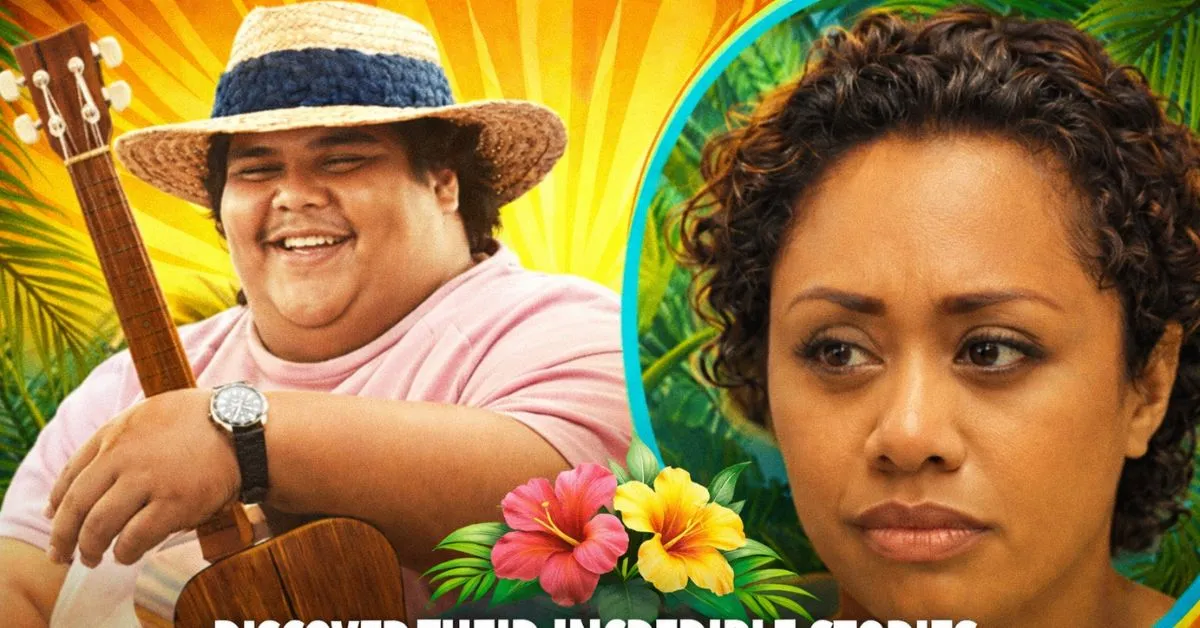
Hawaii has given the world many gifts — its breathtaking landscapes, its deep-rooted aloha spirit, and the soul-stirring voice of Israel Kamakawiwo’ole, lovingly known as “Bruddah Iz.” Israel was a renowned Hawaiian musician, singer, songwriter, and Hawaiian sovereignty activist whose music reached far beyond the shores of the Pacific. His iconic ukulele melodies and gentle voice became anthems of hope, love, and Native Hawaiian cultural identity that still echo across generations. Few artists in history have left behind a legacy so vast, so deeply felt, and so universally beloved as IZ.
But behind the legend stood a family — a wife named Marlene and a daughter named Ceslie-Ann, nicknamed “Wehi” — who lived their lives largely in the shadows of his towering fame. Ceslie-Ann Kamakawiwo’ole was once just known as the child of a beloved star, raised quietly within the warmth of Hawaiian traditions and community values.
Introduction – Who Is Ceslie-Ann Kamakawiwo’ole?
Ceslie-Ann Kamakawiwo’ole is the daughter of the legendary Hawaiian musician Israel Kamakawiwo’ole, widely known as “IZ,” whose iconic rendition of “Somewhere Over the Rainbow” touched the hearts of millions around the world. While her father is remembered as one of the greatest voices in Hawaiian music history, Ceslie-Ann has carved out her own complicated and deeply human story that has drawn significant public attention over the years. She grew up in the shadow of extraordinary fame, carrying the weight of a beloved legacy while navigating personal struggles that very few people ever have to face publicly.
Her story is one of love, loss, hardship, and the complex reality of growing up as the child of a cultural icon.What makes the Ceslie-Ann Kamakawiwo’ole biography so compelling is the striking contrast between the warmth and beauty of her father’s music and the turbulent path her own life has taken since his passing. She has become a figure of public curiosity — not because she sought fame, but because her actions and circumstances thrust her into the spotlight in ways she likely never anticipated.
Understanding who Ceslie-Ann truly is requires looking beyond the headlines and examining the full picture of her life, her upbringing, her struggles, and the very human story behind the name. This article explores every dimension of her journey with honesty, empathy, and a deep respect for the complex reality of her experience.
Early Life and Family Background
Ceslie-Ann Kamakawiwo’ole early life was deeply rooted in Hawaiian culture and music, growing up as the only daughter of Israel Kamakawiwo’ole and his wife Marlene Kamakawiwo’ole. Her father was already a celebrated figure in Hawaiian music long before his global breakthrough, and the family environment she was raised in was rich with cultural pride, musical tradition, and a strong sense of community belonging.
Despite the fame and adoration that surrounded her father, the Israel Kamakawiwo’ole family maintained a relatively grounded and private home life centered on love, Hawaiian values, and a deep connection to their island roots. For Ceslie-Ann, childhood meant growing up with one of the most beloved voices in the world as the soundtrack to her everyday life.
However, life in the Kamakawiwo’ole household was not without its difficulties, as Israel struggled throughout his life with severe obesity and significant health challenges that cast a constant shadow over the family’s happiness. Watching her father battle serious health issues from a young age left a profound mark on Ceslie Kamakawiwo’ole, shaping her emotional world in ways that would continue to influence her long after his passing.
Personal Life and Struggles
Following the death of her father, Ceslie-Ann Kamakawiwo’ole faced the enormous challenge of growing up without the guidance and presence of a parent who had been not only beloved in her personal life but also an icon to the entire world. Grief, combined with the pressures of carrying such a well-known family name, created a heavy emotional burden that shaped her adolescence and early adulthood in deeply significant ways.
She struggled to find her footing in a world that constantly associated her identity with her father’s legacy, making it difficult to build a sense of self that felt fully her own. These personal battles, though largely private for many years, laid the groundwork for the very public challenges that would eventually follow.
As she grew older, Ceslie-Ann faced a range of personal difficulties that reflected the kind of deep-rooted struggles that often come with unprocessed grief, identity challenges, and the pressures of life connected to public fame. Reports suggest she dealt with instability in relationships, financial hardship, and personal decision-making that increasingly drew the attention of authorities and the wider media.
The Infamous Incident and Crime Details
Ceslie-Ann Kamakawiwo’ole came to widespread public attention when she became linked to a serious criminal incident that shocked many who knew and loved her father’s legacy and the values his music represented. The Hawaii car theft case involved theft and robbery charges that painted a picture of a young woman whose personal circumstances had driven her to a very dark and desperate place in her life. Details of the crime suggested that the situation reflected a pattern of behavior rooted in deeper personal and financial struggles that had been building for a significant period of time.
The shocking nature of the charges, combined with her famous family name, ensured the story spread far beyond Hawaii and captured national media attention almost immediately.The specific details of the stolen Mercedes SUV Hawaii incident pointed toward a life that had been significantly destabilized by loss, hardship, and poor choices made under deeply difficult personal conditions.
The Honolulu police report and KHON2 News Hawaii coverage described a situation that was both alarming and profoundly sad — a young woman with a famous name and a painful personal history making choices that would carry serious legal consequences. For many who followed the story, the overwhelming reaction was not one of judgment but of genuine sadness for someone who appeared to be struggling without adequate support or direction.
Legal Troubles and the “Most Wanted” Controversy
Perhaps the most shocking chapter in Ceslie-Ann Kamakawiwo’ole’s public story came when she was reportedly placed on the Hawaii most wanted list 2015 by local authorities — a development that sent shockwaves through the Hawaiian community and far beyond. Being named as a wanted individual is a serious legal designation, and the fact that it was the daughter of one of Hawaii’s most beloved cultural icons made the story all the more striking and deeply uncomfortable for many people to process.
The controversy generated significant media coverage, public debate, and reactions that ranged from shock and disbelief to deep sympathy and calls for understanding and compassion. For a name so closely associated with beauty, love, and the spirit of aloha, the contrast with these legal troubles could not have been more painful or jarring.
The “Most Wanted” controversy raised serious and important questions about the support systems available to children of famous figures who struggle deeply after losing a parent at a young age. Many community members and commentators pointed out that the situation reflected broader issues of mental health, unresolved grief, and the vulnerability of young people connected to public fame without adequate resources.
The Arrest and What Happened After
Ceslie-Ann Kamakawiwo’ole arrested headlines flooded local and national outlets after authorities finally caught her, bringing the immediate legal drama to a close but opening an entirely new and uncertain chapter in her already complicated public story. The arrest drew significant media attention, with outlets across Hawaii and beyond covering the development and revisiting the full timeline of events that had led to this deeply troubling moment.
For those who had followed the story from the beginning, the arrest felt like the inevitable conclusion to a series of events that had been unfolding in an increasingly difficult direction. Law enforcement confirmed the charges, and the legal process that followed would determine the immediate future of Israel Kamakawiwo’ole’s only daughter.What happened after the arrest became a subject of considerable public interest, with many people wanting to know whether Ceslie-Ann would receive meaningful support and rehabilitation alongside any legal consequences she faced.
Impact on Israel Kamakawiwo’ole’s Legacy
Israel Kamakawiwo’ole’s legacy is one of the most powerful and enduring in the history of Hawaiian music, built on a foundation of love, cultural pride, and a voice that continues to move people to tears decades after his passing. The public troubles of his daughter Ceslie-Ann have inevitably cast a shadow over that legacy in certain corners of public conversation, raising uncomfortable questions that many of his devoted fans find deeply painful to confront.
For a man whose music spoke so profoundly about hope, beauty, and the human spirit, the contrast with the struggles of his own child creates a tension that is difficult to ignore and even more difficult to resolve. Most fans and music lovers, however, have chosen to separate the man and his music from the painful circumstances of his daughter’s life. What is clear is that the Israel Kamakawiwo’ole family legacy impact remains far stronger than any controversy surrounding his family, because the emotional power of his music exists independently of the personal struggles of those he left behind.
Millions of people around the world continue to find comfort, joy, and healing in his recordings — particularly his beloved Facing Future album and his medley of Somewhere Over the Rainbow and What a Wonderful World — and that connection shows no signs of fading. The story of Ceslie-Ann has perhaps added a layer of human complexity to the Kamakawiwo’ole family narrative, reminding the world that even the most beautiful legacies are built by deeply human people facing deeply human challenges.
Where Is Ceslie-Ann Kamakawiwo’ole Now?
As of Ceslie-Ann Kamakawiwo’ole today, she has largely retreated from public view, living a life that is deliberately kept away from the media attention that once surrounded her name so intensely. After the legal proceedings that followed her arrest, she appears to have made a genuine effort to step back from the circumstances that led to her public troubles and focus on rebuilding her personal life in a quieter and more private way.
Ceslie-Ann Kamakawiwo’ole current status remains unknown to the public, which suggests that she has successfully managed to reclaim some degree of the privacy that was stripped away during the most difficult period of her life. For many who followed her story, this retreat from the spotlight is seen as a hopeful sign of personal healing and forward movement.
What the future holds for Ceslie-Ann remains an open question, but the sincere hope of many who care about the Kamakawiwo’ole family legacy is that she has found or is finding the peace, stability, and support that she clearly needed for so many years. Her story serves as a powerful reminder that the children of famous people carry burdens that the public rarely fully understands, and that compassion and empathy are always more productive than judgment. Wherever she is today, Ceslie-Ann Kamakawiwo’ole remains forever connected to one of the most beautiful musical legacies the world has ever known — and the hope is that connection brings her more comfort than pain as she moves forward. Her story is not yet finished, and the best chapters may still be ahead of her.
Lessons, Public Opinion, and Media Reaction
When news of Ceslie-Ann’s arrest spread, social media exploded immediately, and local television coverage dominated the airwaves across Hawaii. Everyone had opinions about the situation surrounding the daughter of Israel Kamakawiwo’ole, and the public reaction to crime was a mixture of shock, disappointment, and sympathy from people across the islands.
Many Hawaiians, while saddened by her choices, were careful to distinguish between the daughter and the icon — separating her personal struggles from the untouchable legacy of her father’s music. The story quickly moved beyond local news and became part of a broader national conversation about fame, family, and accountability.
Most Hawaiians maintained that her actions did not tarnish Israel Kamakawiwo’ole’s legacy, continuing to believe that it transcends individual family members and personal mistakes. His music — heard at weddings, funerals, commercials, and films — remained untouchable in the public consciousness, a testament to the enduring power of Native Hawaiian cultural identity. The broader lesson drawn from Ceslie-Ann’s story was one about accountability, compassion, and the need for stronger support systems for children of celebrated figures thrust into the spotlight without ever asking for it. Her case became a cautionary tale not just about personal choices but about how society treats the vulnerable people left behind by iconic figures.
Growing Up as the Daughter of a Hawaiian Legend
Growing up, Ceslie-Ann was surrounded by rich traditions and Native Hawaiian cultural heritage that shaped her identity from the very beginning. Her father, Israel Kamakawiwo’ole — affectionately known as “Iz” — was a celebrated musician whose reggae and jazz music was not just entertainment but a powerful voice for Hawaiian rights and identity. Being the only child of such a towering cultural figure meant that from an early age, the weight of her father’s name shaped how the world perceived her, even when she was deliberately kept out of the public eye. The name Kamakawiwo’ole carried with it a level of expectation that no child should ever have to carry alone.
Her Ceslie Kamakawiwo’ole parents always kept her from the limelight, and as a result, little is known about her upbringing and early years in Hawaii. She grew up as her parents’ only child and had no biological siblings, making the loss of her father an even more isolating and devastating experience. Losing Israel at just fourteen years old, when he passed away in 1997, marked the start of a deeply difficult chapter in her young life. Growing up Kamakawiwo’ole meant constant attention — people recognized the name immediately and expected greatness from the girl who carried it.
Public Curiosity Around Israel Kamakawiwo’ole Daughter
Ceslie-Ann Kamakawiwo’ole lives a private life away from the spotlight, yet many remain deeply curious about her life beyond the news and headlines. Despite keeping a low profile, she is reportedly a mother of five children, and details about her Ceslie Kamakawiwo’ole background and career remain largely unknown to the public.
The public’s fascination with her stems partly from the contrast between her father’s beloved image and the turbulent path her own life has taken — a narrative that continues to draw interest years after the events that made her name known. Fans who discovered IZ through streaming platforms and film soundtracks often find themselves searching for answers about the family he left behind.Her notoriety became widely known when her criminal actions were broadcast on KHON2 live footage on television, reaching a peak of public attention and leaving many people questioning the circumstances that led the daughter of Israel Kamakawiwo’ole to become a wanted criminal.
This curiosity is not purely voyeuristic — many who admired her father feel a genuine concern for her wellbeing, hoping that the woman behind the headlines will one day find peace and stability. Questions like “What is Israel Kamakawiwo’ole’s daughter doing now?” and “Did she follow in her father’s musical footsteps?” continue to be among the most searched queries connected to the IZ legacy Hawaii.
Challenges and Media Attention
Ceslie-Ann made headlines in 2015 when she landed on Hawaii’s most wanted list, shocking the islands and the broader public in equal measure. On February 25 of that year, a Mercedes SUV parked on Ala Wai Boulevard was reported stolen, and police surveillance later captured her getting into a vehicle matching the stolen Mercedes SUV Hawaii and driving off around 4 p.m. Authorities issued a $20,000 arrest warrant, charging her with auto theft under a formal Honolulu police report that spread rapidly across local and national media.
The case quickly escalated when it emerged that she had also violated the terms of the Hawaii Opportunity Probation Enforcement (HOPE) program, compounding the legal trouble she already faced.The pressure to uphold Israel Kamakawiwo’ole’s legacy while dealing with her own personal issues proved to be a significant and overwhelming challenge. These incidents highlighted the stark contrast between her life and the idyllic image often associated with her father’s Hawaiian cultural identity and spirit of aloha.
Media attention, which had largely bypassed her during childhood, suddenly converged on her during her most vulnerable moments — a painful irony for someone who had spent her entire life trying to remain private. The KHON2 News Hawaii broadcast of surveillance footage ensured the story reached every corner of the islands and beyond almost overnight.
The Cultural Legacy She Inherits
Israel Kamakawiwo’ole’s medley of “Somewhere Over the Rainbow/What a Wonderful World” spent 371 weeks atop Billboard’s World Digital Songs chart, making it the longest-leading number-one hit on any Billboard song chart in history. This is the extraordinary musical inheritance that Ceslie-Ann carries — not just as a family memory, but as a piece of Native Hawaiian cultural legacy that belongs to Hawaii and to the world.
Few children of artists are handed a legacy so vast, so globally recognized, and so deeply felt by so many people across generations. The Facing Future album alone remains one of the best-selling Hawaiian music records of all time. The legacy left by her father is monumental — his voice still echoes through every corner of Hawaii and beyond, heard at weddings, memorials, films, and commercials worldwide.
Songs like “Somewhere Over the Rainbow” have transcended generations, becoming anthems for hope, resilience, and the enduring spirit of aloha that defines Hawaiian culture. For Ceslie-Ann Kamakawiwo’ole, carrying such a legacy is about embracing both pride and responsibility in equal measure. Whether she chooses to step into that cultural conversation or continue living quietly on her own terms, the name Kamakawiwo’ole ensures that her connection to Hawaiian history — and to one of its greatest ever voices — will never fully fade.
Frequently Asked Questions
Who is Ceslie-Ann Kamakawiwo’ole?
She is the only daughter of legendary Hawaiian musician Israel Kamakawiwo’ole, nicknamed “Wehi” by her father.
What does “Wehi” mean?
It is a Hawaiian word expressing awe at something profoundly beautiful or shocking — a deeply loving nickname from her father.
Why did Ceslie-Ann make headlines?
She landed on Hawaii’s most wanted list in 2015 after being caught on surveillance driving a stolen Mercedes SUV on Ala Wai Boulevard.
How old was Ceslie-Ann when her father died?
She was just 14 years old when Israel Kamakawiwo’ole passed away in 1997 at the age of 38 from respiratory failure.
Does Ceslie-Ann have children?
Yes, she is a mother of five children, two of whom share their grandfather’s love for the ukulele.
Did her troubles affect her father’s legacy?
No — most Hawaiians firmly separate the artist from his family, and Israel’s music remains as beloved and untouchable as ever.
Where is Ceslie-Ann now?
She lives a quiet, private life away from the public eye with no known social media presence.
Conclusion
The life of Ceslie-Ann “Wehi” Kamakawiwo’ole is a powerful reminder that even the greatest legacies cast long and complicated shadows over the people left behind. Born to a man whose voice moved the entire world, she carried a name far heavier than any child should bear — and stumbled under its weight in ways that were painful but deeply human. Her journey toward redemption reflects the resilience at the heart of Native Hawaiian cultural identity itself — the belief that no person is beyond healing, and no story is beyond hope.
The same spirit of aloha that made her father’s music immortal is the very spirit that many believe still lives quietly within her. Today, she lives privately, raising five children who strum the ukulele and unknowingly carry their grandfather’s music forward into a new generation.

Laiba SEO is a digital marketing specialist focused on search engine optimization, celebrity news trends, and content strategy. She helps brands grow online visibility through data-driven SEO and engaging content.